
Vander and Silco: Anti-heroes or anti-villains?
Introduction:
In this essay I will look at the similarities and differences between the depictions of anti-heroes and anti-villains using the characters and motivations of Vander and Silco from the animated series ‘Arcane’ (2021).
Definitions:
An anti-hero can be defined as: a hero with less than heroic qualities. This may mean that they are depicted as morally ambiguous. For example, Richard Deckard: Bladerunner (1982) – ‘retires’ replicants – humans in all but name. Or they exhibit traits not seen as heroic. For example, Han Solo: Star Wars (1977) – who starts off as a smuggler/mercenary and only gets involved for the reward money. Often the anti-hero is the main character of the story, for example Malcolm Reynolds in Firefly (2002), or a strong supporting character like Red Hood from DC Comics (2005).
An anti-villain, on the other hand, can be defined as a villain (antagonist) with “some semblance of redeeming qualities” (Del Campo: 2017). Villains used to be portrayed in black hats, or they would be booed as they walked on stage. They were easy to see and easy define. “The portrayal of villains has changed dramatically since the late nineteenth century. Modern villains are not necessarily punished, and they are presented as relatable or at the very least sympathetic.” (Del Campo: 2017).
An anti-villain is concerned with outcomes rather than the means by which the outcomes are created. For example, Magneto from X-Men (1963), wants to kill all non-mutants to save mutants from being killed or experimented on. Somewhat extreme, yet an effective way to achieve his goal. However, you can sympathise with the reasons for his thinking. He is driven by massive trauma, a fear of persecution, and a genuine love for his people. He believes that extreme measures are required due to his experiences as a holocaust survivor. “By eschewing traditional stereotypes and creating characters with more depth and complexity, writers are able explore themes such as morality, power and societal norms in a more nuanced way.” (Mohan: 2025)
Vander:
What makes Vander an anti-hero, rather than a hero? At the outset of the series, Vander displays less than heroic qualities. He incites violent rebellion and attempts to kill his brother-in-arms when they disagree over the way forward.
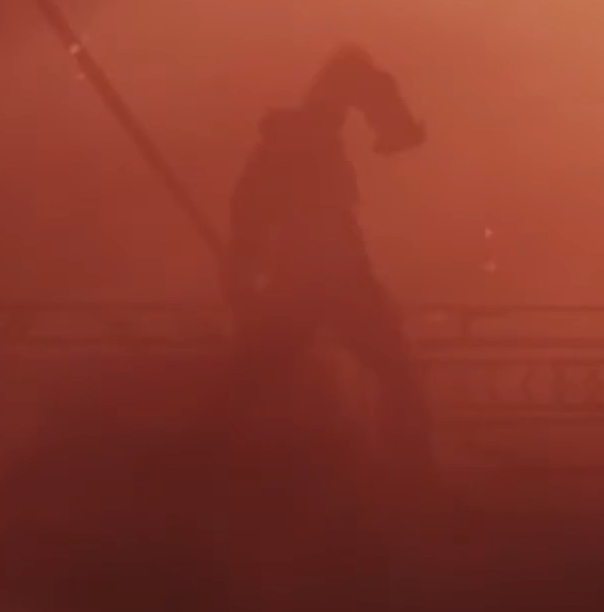
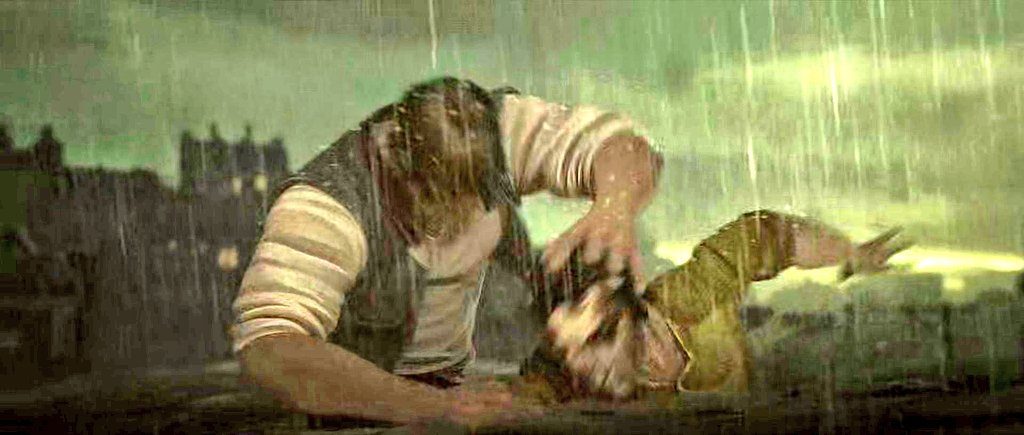
However, after Vander witnesses the shattered bodies of his friends and companions on the bridge that separates Zaun and Piltover, two of which are the bodies of his good friends Vi and Powder’s parents, he drops his weapons and picks up the two children (now orphaned due to his actions) and takes them into his care.
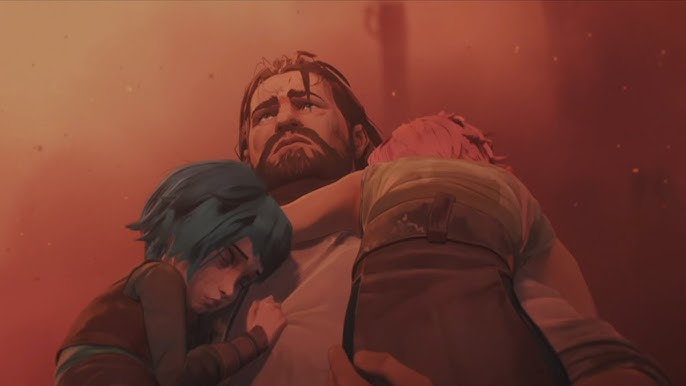
Guilt over his decisions and actions takes over and he recognises that violence (because of the consequences) is not the way to achieve his goals.
Rather than sowing revolution, he now chooses to build a family and a community in the Undercity, helping people live worthwhile lives as if they were his own family, putting duty to the citizens of Zaun above everything else. “This stance of Vander shows his adherence to deontological ethics, where right action is dictated by duty and moral rule.” (The Criterion: 2025)
He renounces violence and instead builds relationships with Piltover by working with their Enforcers to keep the peace. There is no doubt that he is an ethical, duty-bound leader…. With a past he’d rather not repeat; he literally ‘hangs up his gloves’ above the bar he runs as a daily reminder of the horrors of his past.
The irony in all of this is that Vander now cherishes family above all else and when that family is threatened, he reverts to type, and violence, as the only solution he knows and understands. This trait is later used by another character in the series to turn Vander into a rabid monster.

Silco:
What makes Silco an anti-villain, rather than just a villain? Much like Vander, he too was part of the rebellion. However, when Vander renounced violence, Silco wanted to continue down that route. Using the rationale ‘the end justifies the means’, he runs the Undercity like a ‘Mob-Boss’, flooding the area with mind and body altering drugs, using child-labour, and threats of, and real, violence to control others. “… deontological ethics argues that the consequences of an act of willing cannot be used to determine whether that person has good will or not, as actions causing harming to an innocent person could accidentally yield good consequences and vice versa.” (The Criterion: 2025)
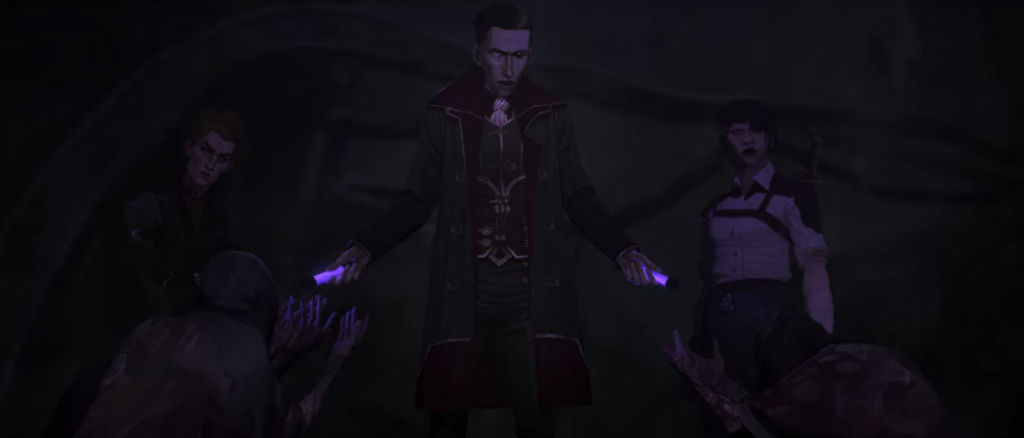
The objective of all this is to create a clean-air environment for the citizens of the Undercity and free them from the perceived tyranny and oppression of Piltover, as an independent nation. The money he earns from drug-running is ploughed back into Zaun as well as his own pockets. There is little doubt that in his mind he is making Zaun a better place for the citizens.
He takes Powder (now calling herself Jinx) from the wreckage of her family and cares for and nurtures her as if she were his own daughter. He sees a lot of himself in the frightened lonely child that runs to his arms that night. Her ‘brothers’ and her ‘father’ are dead, and her sister has abandoned her.
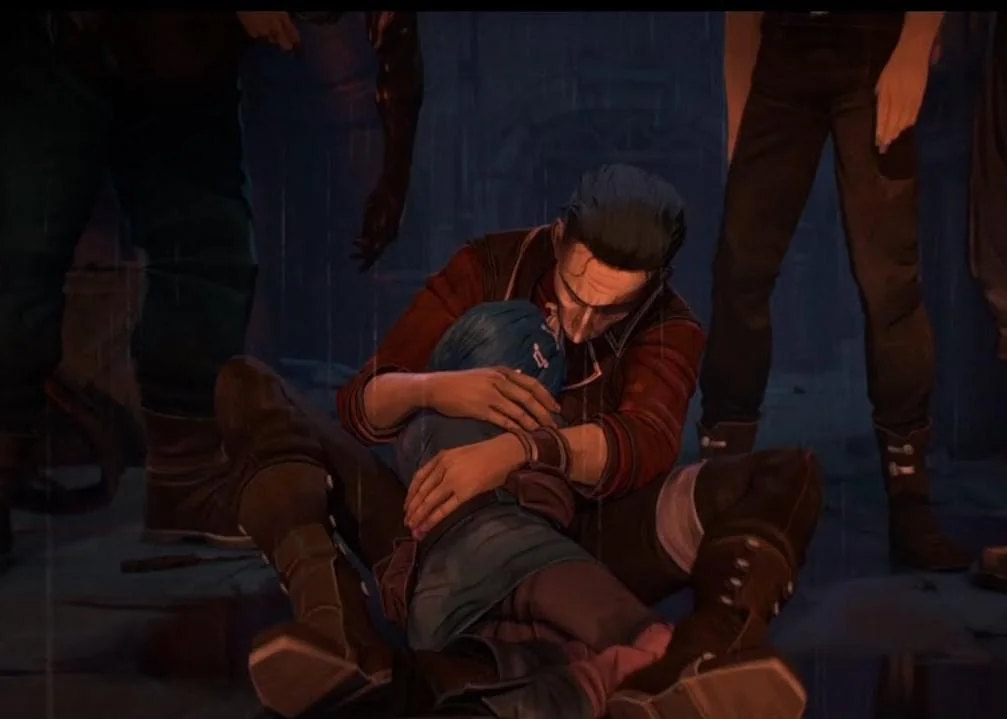
In trying to create a ‘mini-me’ in Jinx, he ends up lying to and manipulating her emotionally. He believes that this influencing is ‘for the greater good’ and that ultimately it will make her a stronger person. In the end, however, he was willing to sacrifice his ideology and forgo everything that he had worked for to save her. “A sympathetic portrayal of characters who would typically be seen as outright evil or beyond redemption allows readers to experience and begin to understand the human condition’s complexities.” (Mohan: 2025)
Similarities and Differences:
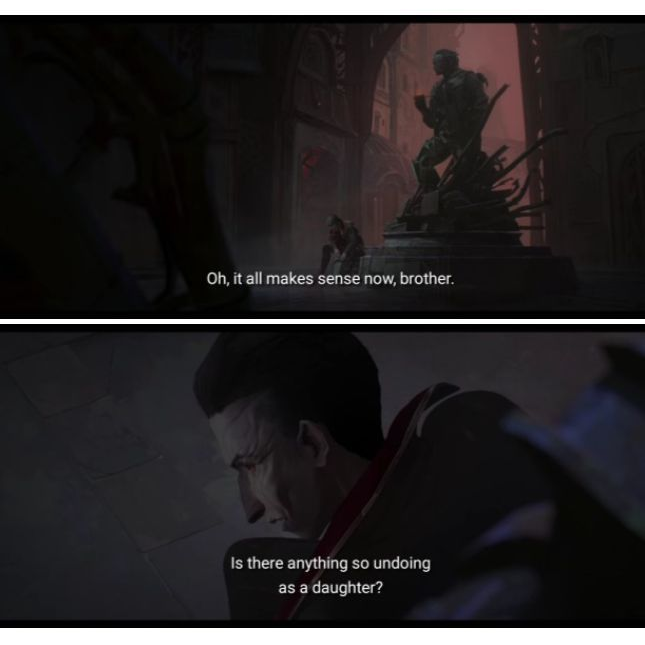
Vander and Silco share many similarities, especially at the start of the series, both being founding members of the Zaun uprising and championing violent revolution in order to reach their goals. They both wanted a better Zaun, however they couldn’t agree on the best way to achieve this outcome, which caused Vander to turn on Silco, creating the Silco we see later in the series. They both wanted equality between the two halves of the city, and they both took Jinx to be their daughter, even though she was not related to either of them. In the end, she was the ‘undoing’ of them both. It turned out that family meant everything to both of them and they both refused to give up their family for an easy peace.
Conclusion:
Arcane is mainly told from the perspective of Vi (the sister who abandoned Powder as a child) and she hates Silco! This is what makes Silco the anti-villain in the story. Had it been told from somebody else’s point of view, then Silco would possibly have been the anti-hero. This is what makes the definitions of each so difficult to pinpoint and difficult to distinguish which character is which. Perspective and moral perception is everything. This is not the just the case with ‘Arcane’. In many cases those close to the narrator become the hero and those opposed become the villain. Had Bladerunner (1982) been told from Priss’, rather than Deckard’s perspective, Roy Batty would be the anti-hero (he certainly displays heroic traits) and Deckard the anti-villain.
CITATIONS:
Del Campo, M.M. (7AD) Sympathy for the Devils: An Analysis of the Villain Archetype Since the Nineteenth Century. thesis. Available at: https://rio.tamiu.edu/etds/108/.
Singla, P. (2025) ENGLISH LITERATURE IN GLOBAL AGE: AN ANTHOLOGY OF SELECTED ESSAYS. SGSH Pulbications. Available at: https://books.google.co.uk/books?hl=en&lr=&id=KE9eEQAAQBAJ&oi=fnd&pg=PA39&dq=anti+villain&ots=ff6n6HMCvR&sig=lWLQUEWIQaciOByKwNviKhDsHc4&redir_esc=y#v=onepage&q=anti%20villain&f=false.
‘Inherited Morality and Ethical Conflict in Arcane: A Philosophical and Psychological Critique of the Greater Good’ (2025) The Criterion, Vol. 16(Issue-III). Available at: https://www.the-criterion.com/V16/n3/FL06.pdf.

